After Extraction
Structural Drying & Dehumidification
Removing standing water is only the first step. Structural drying is what actually protects your San Diego property from long-term damage, warping, and mold growth.
Structural drying is the process of removing moisture from a building's structural materials — framing, subfloor, drywall, and insulation — after a water loss. It's a controlled, monitored process, not just "pointing fans at wet areas."
Materials that look dry on the surface can still hold significant moisture underneath. Drying them properly, and confirming they've actually reached a dry standard, is what prevents problems like warped flooring, weakened framing, and mold growth from developing weeks after the original water event.
How It Works
How Professional Structural Drying Works
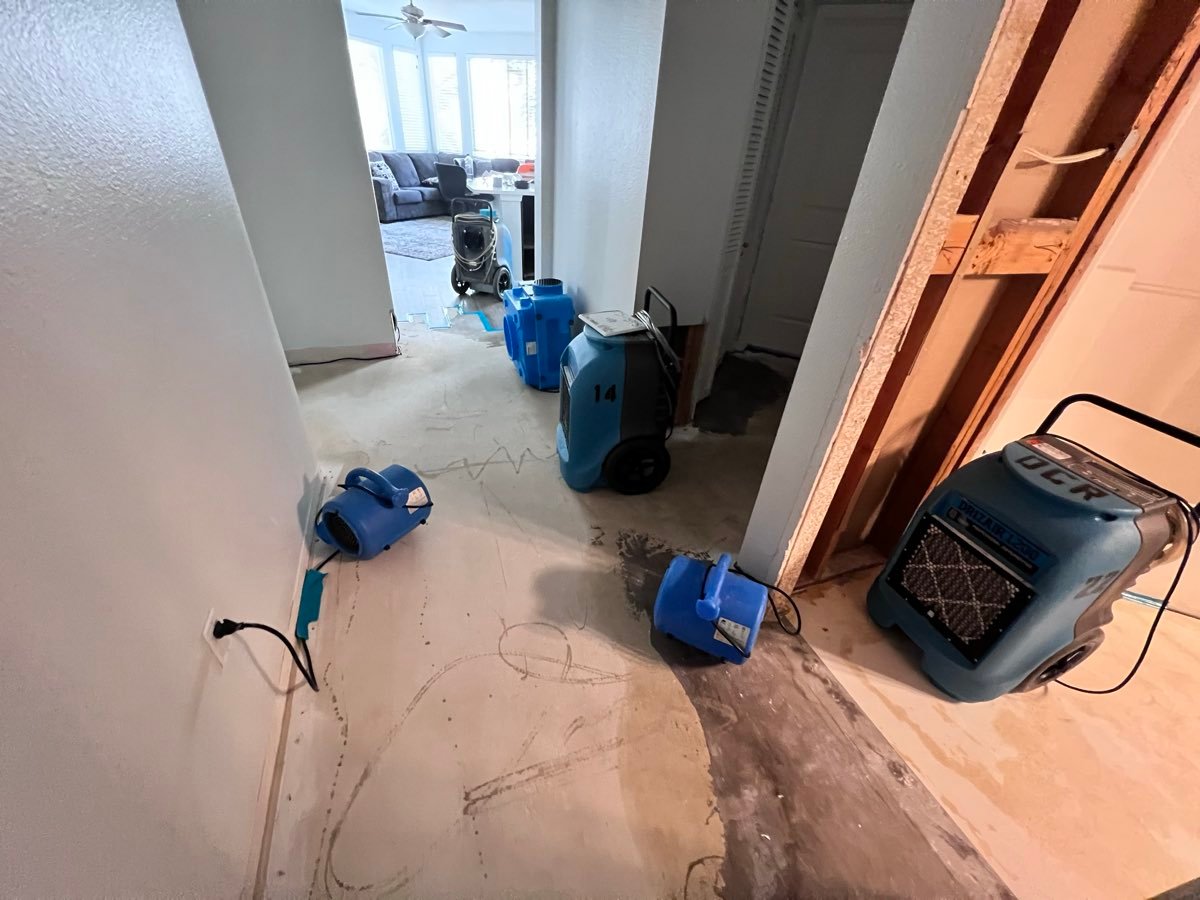
We combine air movement and dehumidification to create the right drying environment. Air movers increase evaporation from wet surfaces by moving air across them, while dehumidifiers pull the resulting moisture out of the air — without that step, moisture just resettles on nearby surfaces.
Equipment placement isn't one-size-fits-all. The number and position of air movers and dehumidifiers depends on the size of the affected area, the materials involved, and how much moisture they've absorbed. We calculate and adjust equipment placement throughout the job.
Moisture Monitoring: How We Know When It's Actually Dry
"Dry to the touch" isn't a reliable standard — materials can feel dry on the surface while still holding excess moisture inside. Throughout the drying process, we use moisture meters to take readings from affected materials and track how those readings change over time.
We compare readings from affected materials against unaffected reference materials in the same property to establish what a normal, dry moisture level looks like for that specific structure. Drying equipment stays in place and monitoring continues until materials reach that standard — not on a fixed timeline.
What Determines Drying Time
- Category and class of water — cleaner water and less-saturated materials generally dry faster than heavily contaminated or deeply saturated conditions.
- Materials affected — dense materials like solid wood framing hold and release moisture differently than porous materials like drywall or carpet padding.
- How long water sat before mitigation began — the longer materials were wet before drying started, the longer full drying tends to take.
- Ambient humidity and airflow — the property's environment affects how efficiently equipment can pull moisture out.
Because of these variables, we don't quote a fixed drying time before inspecting the property. Most structural drying takes several days at minimum; more extensive losses can take longer.
Questions
Structural Drying FAQ
How long does structural drying take?
It depends on the category of water, how saturated materials are, and the size of the affected area. Many jobs take three to five days of active drying at minimum, with monitoring throughout. We'll give you a more specific estimate after inspecting your property.
Do I need to leave my home during structural drying?
In most cases, no. Drying equipment does run continuously and can generate noise and some warmth, but most residents are able to remain in the home. We'll talk through what to expect for your specific situation.
Will drying equipment increase my electric bill?
Air movers and dehumidifiers do use electricity while running, and a multi-day drying job will have some impact on your utility costs. We aim to use the right amount of equipment for the job — not more than necessary.
What if a material won't dry?
Some materials, like saturated insulation or certain engineered wood products, may not be able to be effectively dried and restored. When that's the case, we'll explain why and discuss removal and replacement as part of the restoration plan.
Need Structural Drying After a Water Loss?
Call Agee Restoration Services for professional drying and moisture monitoring in San Diego.